Rotary milking parlour – when it pays: the Kamiński family dairy farm
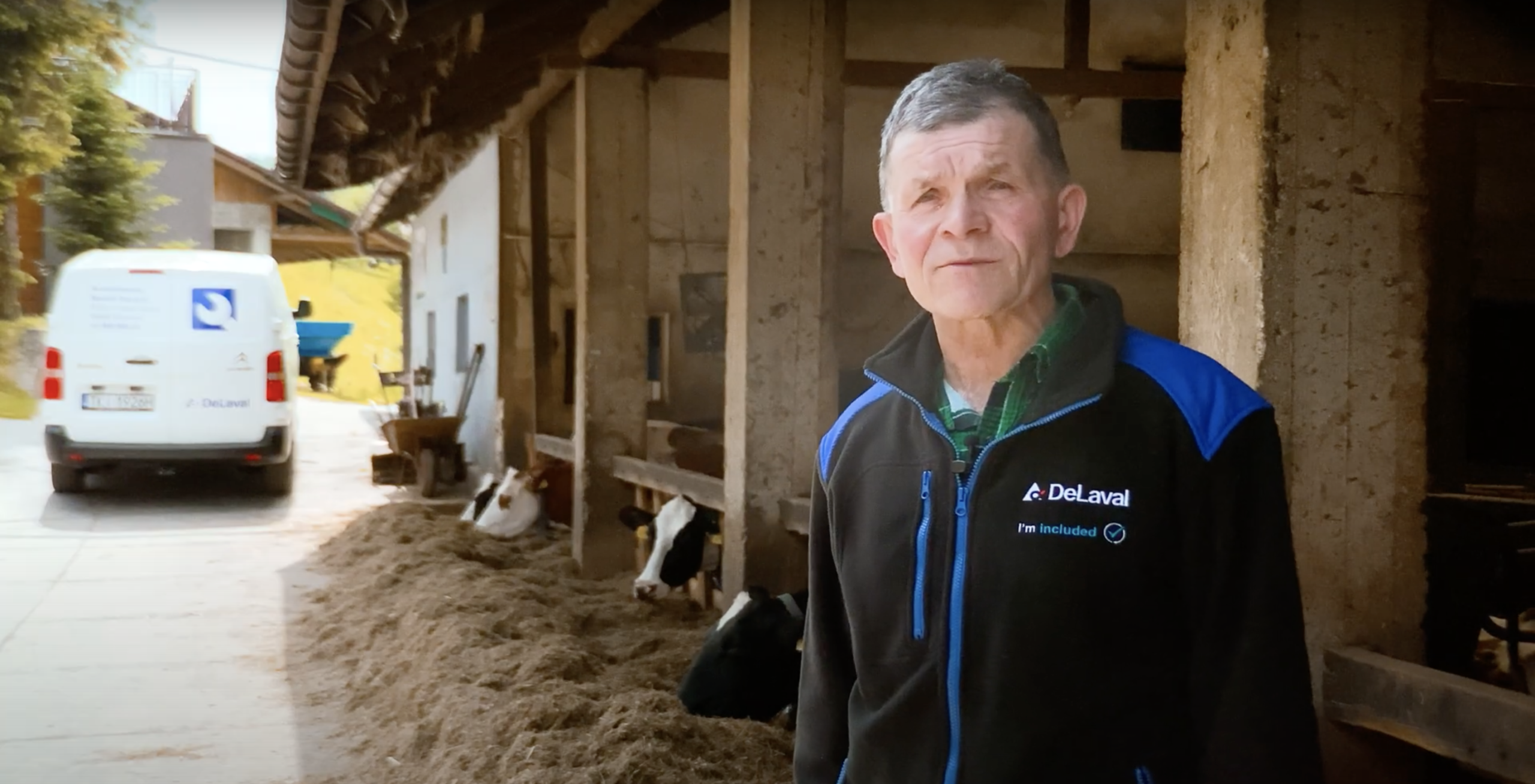
Instructor: Franciszek Kamiński
Rotary milking parlour – when it pays and how it affects udder health
In a 2×4 herringbone parlour the Kamiński family milked 180 cows for 7 hours, twice a day. People and cows were worn out. Today a DeLaval E100 rotary with 40 stalls milks about 350 cows in 2 hours, washing included. The course shows from what herd size a rotary makes sense and what you need to plan around it.
What you will learn
- From what herd size a rotary is worth considering – usually 150–200 cows
- Milking routine: foam, fore-stripping and attaching the cluster after about a minute
- How the TSR robot takes over post-milking teat disinfection
- How somatic cells fell from about 400,000 to below 100,000
- Pre-cooling milk with groundwater from 34 °C to 16–17 °C
- DelPro, the sort gate and three feeding groups in the herd
- A barn built for welfare: water beds, scrapers every 2 hours, brushes, curtains
Who this course is for
- Dairy farmers planning a new milking parlour
- Farms choosing between a rotary, herringbone, parallel parlour and robots
- Family farms growing beyond 150 cows
- Advisers and herd managers involved in barn design
About the farm in the course
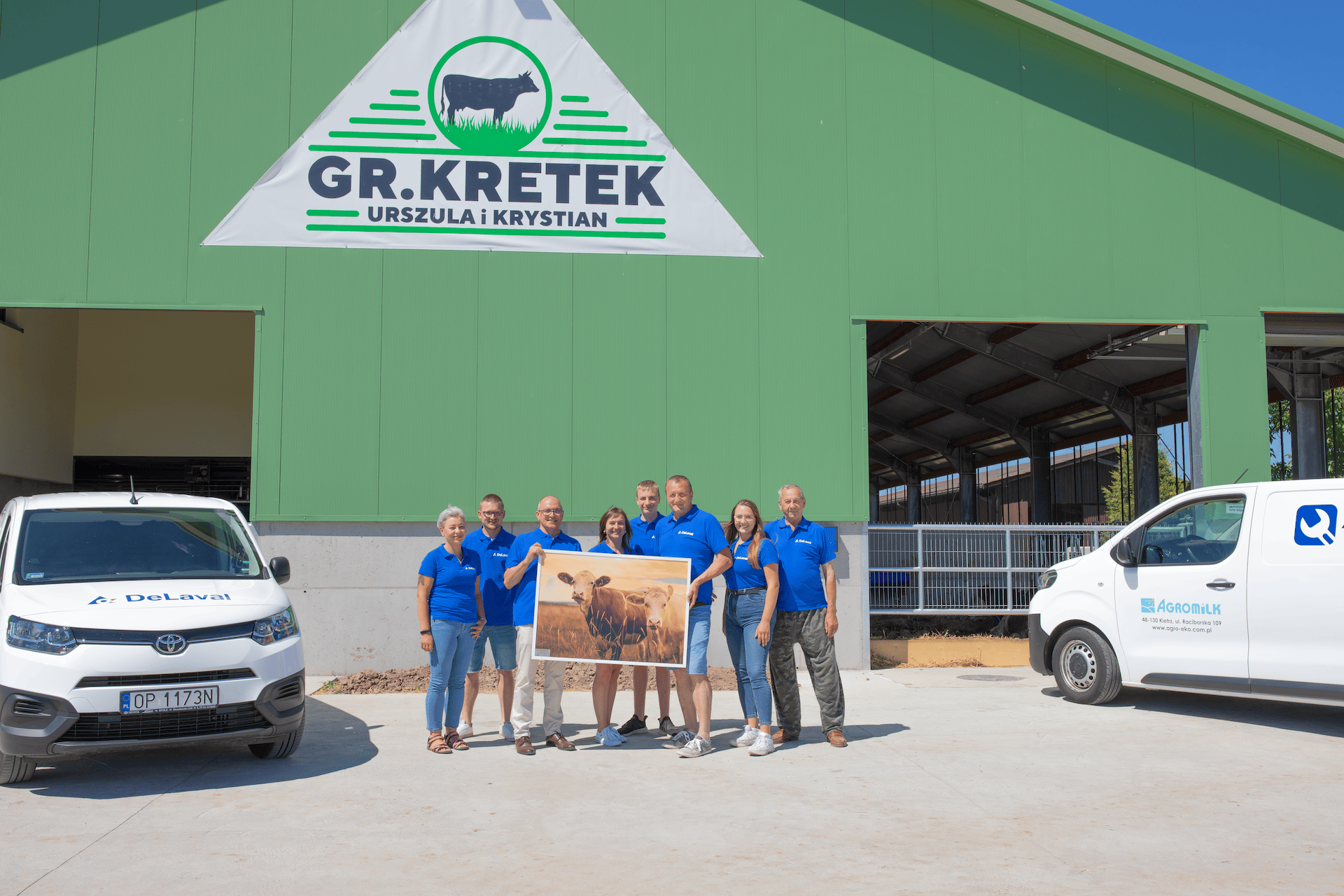
Franciszek Kamiński runs the farm in Warmia, north-east Poland, with his three sons: Artur manages the barn, Patryk breeding and Karol feeding and machinery. They bought the farm in 1997 and started with 11 cows. Today they milk about 350 cows and keep over 800 head of cattle. DeLaval specialists Andrzej Kowalski, Tomasz Bursztyński and Piotr Mańkowski explain the equipment.
The second lesson covers more than a hundred farmers' questions with concrete answers: service at about 3 grosze per litre, liner changes, working through a breakdown and training heifers on the rotary. This is a free online video course that you watch at your own pace. You get a certificate after completing the lessons, and you can ask questions under each lesson. Start with the virtual barn tour.
What you will learn
- ✓Judge from what herd size a rotary pays and how many cows you can milk per hour
- ✓Set up a rotary milking routine: foam, fore-stripping, attach after about a minute
- ✓Replace manual teat dipping with a TSR robot and ease the milkers' workload
- ✓Lower somatic cells with fast, calm and hygienic milking
- ✓Pre-cool milk with groundwater from 34 °C to 16–17 °C
- ✓Plan a barn for cow welfare: water beds, scrapers, brushes, curtains
Frequently asked questions
Who is this course for?+
For dairy farmers planning a new parlour or choosing between a rotary, herringbone, parallel parlour and robots.
From how many cows does a rotary pay?+
According to DeLaval specialists, a rotary makes sense from roughly 150–200 cows. The Kamiński family milks about 350 cows on it, and the barn is designed for 500.
What equipment is shown?+
A 40-stall DeLaval E100 rotary, ECG300 crowd gate, TSR teat-spray robot, Evanza clusters, DelPro, scrapers, cow brushes and milk pre-cooling.
Does the course cost anything?+
No, the course is free. You get unlimited access and watch the lessons at your own pace.
Will I get a certificate?+
Yes. You receive a certificate after completing all lessons.
Can I ask the instructors questions?+
Yes, you can ask in the Q&A section under each lesson.
Curriculum
- ▶Rotary parlour and udder health – Kamiński family farm tour🔒
- ▶Questions and answers: the rotary parlour on the Kamiński farm🔒
Student reviews
No reviews yet.